


Orthodontics
Orthodontics is a specialized field of dentistry focused on the diagnosis, prevention, and treatment of malocclusions (bite irregularities). The term “orthodontics” comes from Greek, where “orthos” means straight and “odous” means tooth. The goal of orthodontics is to achieve straight, properly aligned, and aesthetically pleasing teeth.
Crooked teeth not only affect appearance but can also lead to health problems such as difficulty maintaining oral hygiene, an increased risk of cavities, and periodontal disease. Orthodontic treatment with fixed braces allows for the movement of teeth into their proper positions. This ensures correct occlusion, which helps maintain long-term oral health.
Why treat bite irregularities?
A healthy bite and straight teeth
Crooked teeth and misaligned bites can affect many aspects of a patient’s life. Difficulty maintaining oral hygiene increases the risk of cavities and periodontal disease. Improperly positioned teeth can also cause discomfort while eating and speaking. With orthodontic treatment, teeth are moved into the correct position, which not only improves the aesthetics of the smile but also contributes to overall oral health.
At the Aldent Comprehensive Dentistry Center, we recommend scheduling an orthodontic visit as soon as the first baby teeth appear (around 6 months of age) and later when the first permanent teeth erupt (around 6–7 years of age). Early consultation allows for the detection of potential bite problems and assessment of proper jaw development. Between the ages of 10–12, the orthodontist can work on aligning the relationship between the upper and lower jaw. Tooth alignment and straightening take place later, once the child has all permanent teeth. Such treatment helps patients gain self-confidence and improves facial harmony.
A healthy bite and straight teeth
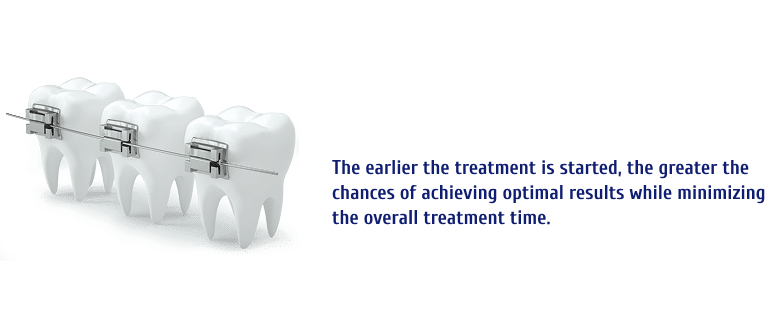
Early diagnosis of malocclusion makes it possible to use more effective and less invasive treatment methods. The earlier the treatment begins, the greater the chances of achieving optimal results while minimizing the overall treatment time. Thanks to early orthodontic visits, we can prevent more serious problems from developing and ensure your child’s smile remains both healthy and beautiful.
Diagnostic process and treatment planning
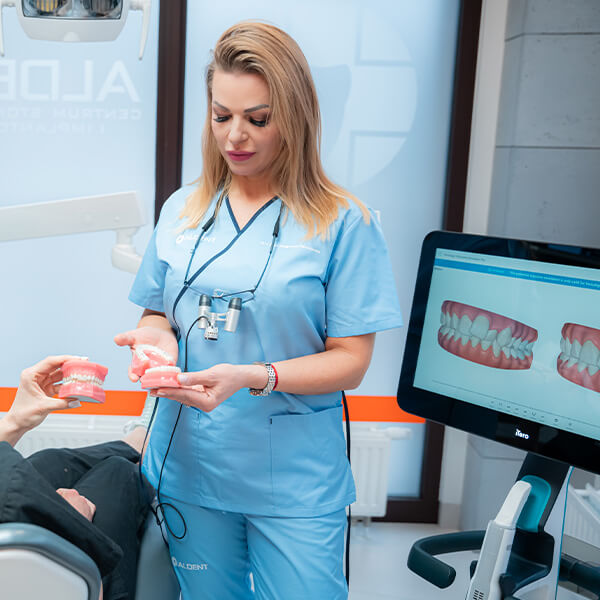
At the Aldent Comprehensive Dentistry Center, we focus on thorough diagnosis and an individual approach to every patient. Our diagnostic process includes:
- Detailed patient interview – During the first visit, we collect detailed information about the patient’s health status and their expectations regarding treatment outcomes.
- Clinical examination – We assess the condition of the teeth, bite, and facial structures.
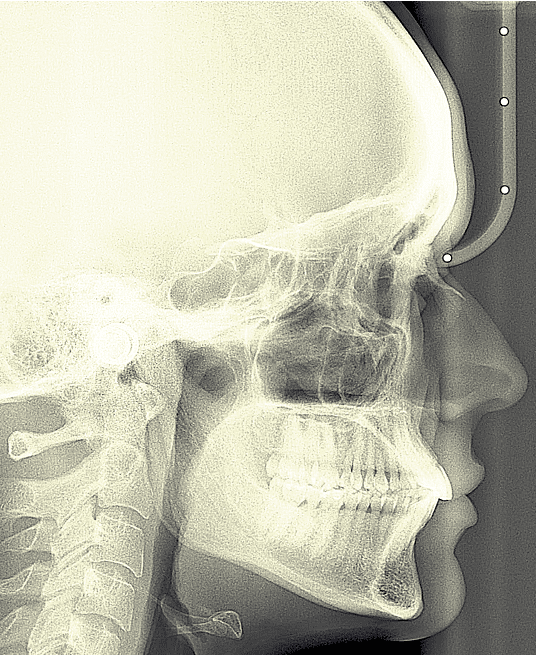
- Radiological examinations – We require up-to-date panoramic X-rays (no older than one year) and cephalometric images (lateral head X-rays), which provide comprehensive information about the patient’s dentition and bone structure.
- Diagnostic models – We take impressions to create diagnostic models that assist in precise treatment planning. Currently, thanks to digital technology, we perform intraoral scans, which eliminate the need for physical models.
Once the necessary examinations are completed, the orthodontist prepares a personalized treatment plan and explains it to the patient. The plan covers:
Diagnosis of the problem and its causes
A detailed description of the available bite correction methods, including types of orthodontic appliances.
The expected duration of wearing braces and the schedule of follow-up visits.
Recommendations for maintaining oral hygiene during orthodontic treatment.
Course of orthodontic treatment
Oral hygiene care
Regular check-up visits

End of treatment and retention
How to shorten orthodontic treatment?
To shorten the duration of orthodontic treatment, it is worth following a few guidelines:
- Maintain proper oral hygiene.
- Use tools such as floss holders, interdental brushes, single-tuft brushes, or electric toothbrushes with special orthodontic tips.
- Use antibacterial mouth rinses.
- Take care of your braces.
- Avoid biting pencils, pens, ice cubes, and other objects, as well as nail biting.
- Do not eat hard or sticky foods.
Stages of Orthodontic Treatment at CSK Aldent
During your first visit to Aldent Comprehensive Dentistry Center, we take a detailed medical history and carefully examine your mouth. We also perform essential X-rays – a panoramic image (orthopantomogram) and a cephalometric X-ray (side view of the head). These help us check the health of your teeth, roots, and spot any hidden problems such as inflammation or impacted teeth.
During the second visit, if fixed braces are chosen, our orthodontists will fit them. The procedure takes around 30 minutes and is completely pain-free. Patients are given clear guidance on how to look after their braces and what to expect throughout treatment.
Regular check-up visits are essential for successful orthodontic treatment. They usually take place every 4–8 weeks, depending on the type of braces. During these visits, the orthodontist checks both your braces and the health of your teeth.
Types of orthodontic appliances
Characteristics and application
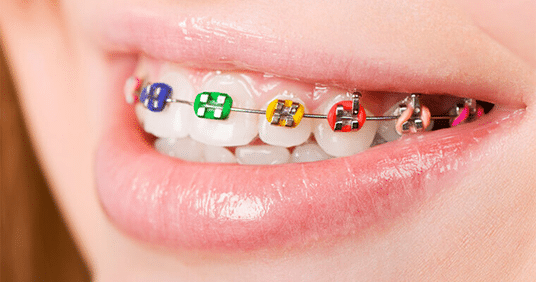
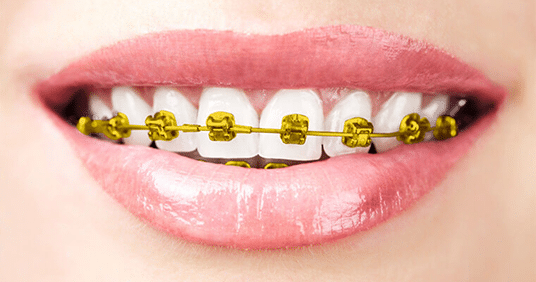
Traditional fixed braces are commonly used in both children and adults with permanent teeth. They consist of high-quality metal or gold brackets, wires, and small elastic bands, which are attached to the teeth by the orthodontist and can only be removed at the dental office. Metal brackets are available in silver and gold. The size of the brackets is adjusted to the size of the teeth – the larger the front surface of the tooth, the smaller the bracket appears.

How it works
Small elastic bands (ligatures) are placed on the brackets to hold the thin wire in place. The wire applies gentle pressure to the teeth, moving them into the correct position or rotating them if needed. During check-up visits, patients can choose colorful elastics for their braces. We offer a full range of colors that can be mixed and matched, making treatment more personalized and even fun.
Effectiveness and comfort
Fixed braces make it possible to correct more serious bite problems than removable braces. The length of time a patient needs to wear them depends on the type of bite issue and the patient’s age. Check-up visits take place every 4 weeks, during which the orthodontist monitors progress and makes necessary adjustments.
Advantages and appearance
Aesthetic fixed braces are an ideal solution for patients who want to correct bite problems and crooked teeth with minimal visibility of the appliance. The brackets are made of tooth-colored materials such as porcelain, sapphire, or crystal, which makes them much less noticeable. They do not discolor and keep their aesthetic look throughout the treatment.
Comfort of use
Aesthetic braces are smooth and low-profile, which ensures maximum comfort for the patient. Check-up visits take place every 4 weeks, just like with metal braces, during which the orthodontist makes necessary adjustments and monitors progress.

Innovative technology
Self-ligating braces are a modern solution in orthodontics. In this system, no elastic ligatures are used – the wire is held in place by special clips built into the brackets. This design reduces friction, allowing teeth to move with lighter forces, which means much less pain and discomfort during treatment.
Health and aesthetic benefits
Clinical studies show that self-ligating braces lead to 40% less plaque build-up compared to traditional braces. The brackets are also smaller in size, making them less visible. Check-up visits take place every 8 weeks, which helps maintain excellent oral hygiene.
Comfort and availability
At our Comprehensive Dentistry Center, we offer both traditional self-ligating braces and aesthetic ones, which are less visible on the tooth surface, giving you greater comfort throughout orthodontic treatment.

Invisalign aligners are a discreet and innovative method of treating orthodontic problems, ideal for adult patients. Made of soft, transparent material, they are practically invisible and provide the highest level of everyday comfort.
Treatment effectiveness
The aligners are thermoplastic, which allows them to fit the teeth perfectly. They can be easily removed and put back on, making oral hygiene much easier. It is recommended to wear the aligners for 20 hours a day, which significantly shortens treatment time compared to traditional methods. The treatment is painless and well tolerated by patients. Cleaning the aligners requires nothing more than a toothbrush and toothpaste.
This treatment method is designed especially for adults and is carried out under the full supervision of an orthodontist.


Advantages of the Invisalign method:
- An alternative to traditional fixed braces
- The aligners are transparent and practically invisible
- Made of thermoplastic material, they fit the teeth perfectly and feel comfortable in the mouth
- Easy to remove and put back on at any time
- Significantly shortens treatment time compared to traditional methods
- Treatment is painless and very well tolerated by patients
Cleaning the aligners requires nothing more than a toothbrush and toothpaste. Remember – only regular wear of the aligners ensures the best results!
Characteristics and use of removable braces
Our clinic specializes in treating bite problems using removable braces, also known as removable appliances. These braces are an important part of orthodontics, not only moving teeth within the dental arch but also influencing the bone structure and the neuromuscular system. Removable braces are designed to stimulate proper growth of the facial area, which is especially important for children with mixed dentition. By starting treatment early with removable braces, we can often prevent the need for tooth extractions later on.
Advantages of removable braces
- Adaptability: Removable braces adjust to a child’s changing teeth, supporting proper development of the upper and lower jaw.
- Versatility: They can be used to correct various bite problems, making them a universal tool in orthodontic treatment.
- Ease of use: They can be easily taken out and put back in by the patient, which makes daily oral hygiene much easier.


Types of removable braces
TRAINER T4A
The TRAINER T4A is an innovative appliance made of flexible polyurethane with shape memory. Thanks to this, it adapts perfectly to the dental arch without the need for custom fitting for each patient. Treatment with the T4A trainer is carried out in two stages:
- Initial stage:
- The appliance is made of a soft, flexible material that adapts well to uneven front teeth.
- Gentle forces act on the teeth, helping them move into the correct arch position.
- Correction of improper muscle and functional habits improves tooth alignment within 6–8 months.
- Final stage:
- The trainer has the same shape as in the initial stage but is made of a harder material, which allows stronger forces to be applied.
- It continues aligning the teeth and correcting malocclusions, while further addressing poor muscle and functional habits.
- Treatment usually lasts another 10–12 months, followed by a retention phase.
TRAINER i-3
The TRAINER i-3 belongs to the group of soft appliances, which ensures high comfort and good tolerance for patients. This appliance is worn both during the day and at night. It is effective even in cases of incorrect tongue position or mouth breathing. Consistent wear is essential to correct these habits and achieve the best treatment results.
How to use trainers
Putting them on:
- Place the trainer in your mouth with the tongue tag facing up.
- Put the tip of your tongue on the tongue tag.
- Keep your lips closed and breathe through your nose.
How it works:
- Once inserted, you will feel the trainer working on your front teeth.
- Even when the trainer is not in your mouth, keep your tongue in the correct position and breathe through your nose with your lips closed.
Care:
- After use, rinse the trainer under running water and place it back in its box.
- It is recommended to use disinfecting tablets and a sonic cleaner.
Treating malocclusions with removable braces
Removable appliances are an excellent solution for younger patients, where we can effectively influence the development of the jaw and mandible, helping to avoid more complex interventions later in life. Our experience and modern technologies allow us to provide effective and comfortable treatment, tailored to the individual needs of each patient.

Would you like to schedule an appointment?
FAQ
When Should Adults See an Orthodontist?
We recommend visiting an orthodontist if you notice problems with biting, chewing, or speech. In addition, feeling that your teeth are misaligned in the arch, wanting to improve the aesthetics of your smile, mouth breathing, or teeth grinding and wear should prompt you to schedule a consultation.
Our team of orthodontists is ready to assess your situation and recommend the best treatment options.
When Should You Take Your Child to an Orthodontist?
What is Clear Aligner Orthodontics Available in Lublin?
How long does orthodontic treatment take in Lublin?
What are the costs of orthodontic treatment in Lublin?
Is orthodontic treatment available for patients of all ages?
Cosmetic Dentistry
Prosthodontics
Invisalign®
Orthodontics
Invisalign®